

9/11 Anniversary: Using Storytelling to Connect Historical Turning Points 20 Years Later
The National September 11 Memorial and Museum discusses the importance of connecting our history through storytelling on the 20th 9/11 anniversary.

Share
April 13, 2021
The National September 11 Memorial and Museum discusses the importance of connecting our history through storytelling on the 20th 9/11 anniversary.
Share
By Meredith Ketchmark
“Why do people care so much about this day? Why is it so important?” Questions like these may sound familiar when teaching your students about historical events that happened decades, or perhaps even centuries, before they were born. When it comes to teaching about 9/11, however, the feelings of disconnect or apathy that students may express can sometimes seem incomprehensible, as most educators today remember exactly where they were on 9/11. This experience that educators possess—the memory and emotion that is attached to that day—is just one of many challenges to overcome when teaching 9/11 to a class full of students who may simply look at it as just another day in history.
The question then becomes: How can we encourage students to care as much as we do? How can we foster an understanding of why this day matters for them? As we inch closer to the 20th anniversary of the 9/11 attacks, finding meaningful ways to bridge the gap between history and memory is paramount. In our experience working with thousands of students and educators, the education staff at the 9/11 Memorial & Museum have found a simple strategy incredibly effective in translating this otherwise abstract event into something real and tangible for students: storytelling.
At the heart of the museum’s mission lies a commitment to storytelling, which allows visitors to remember the events of 9/11 and memorialize the victims while honoring individuality. All of our exhibitions and programming echo the significance of putting a name to a face or an anecdote to an artifact, but there is perhaps no program that more strongly encapsulates this effort than our Anniversary in the Schools Webinar program. This free, annual commemorative program began in 2016 and has since reached more than 1 million students across the globe. It is centered around the power of the first-person voice; more specifically, it features survivors, family members, first responders and witnesses sharing their stories directly with students from within the museum. To allow the program to have the greatest impact, continuing to make these stories accessible to students and teachers even after their debut on the 9/11 anniversary was pivotal. Thus, the Webinar Stories archive was born.
As its name suggests, the Webinar Stories archive serves as a repository for first-person accounts of the attacks and their aftermath that have been chronicled as part of the Anniversary in the Schools Webinar program. The stories offer diverse perspectives that allow students who were not alive when the attacks occurred to not only understand what was happening on 9/11, but also to internalize the events on a more personal level. Each webinar story* is accompanied by teaching guides featuring tailored questions for students in grades 3 through 12. A list of additional resources is included with each story to encourage further learning. The tailored questions allow teachers to easily integrate these stories into the course of study while challenging students to not only attend to key details of that day, but also to analyze how elements of each story connect to them and the world they have inherited.
Take the example of Lila Nordstrom, a young woman who on 9/11 was a student at Stuyvesant High School, mere blocks from the World Trade Center. Nordstrom’s story begins with her recounting the events of 9/11, including her evacuation out of lower Manhattan following the collapse of the Twin Towers. She explains how the fear and uncertainty she felt that day only grew when less than a month later, she and her peers were expected to be back in their classrooms despite debate over whether the air quality around the World Trade Center site was safe. She concludes by reflecting on how 9/11 affected her as she entered adulthood, and discussing her ongoing advocacy work in response to the ongoing impact of 9/11 on her community.
Using a story like Lila Nordstrom’s to connect students to 9/11 places them in the shoes of someone they can relate to: a student. It has become perhaps even more timely considering the current crisis we are living through with the COVID-19 pandemic. Today’s students have a frame of reference to better understand what it is like to experience a mass disruption to their daily life and to have their sense of safety radically altered. There are many uncertainties today—just as there were 20 years ago. One thing that Nordstrom’s story demonstrates, however, is that there is good that can come out of tragedy—there is an after. Themes of hope, resilience and perseverance underscore these sobering stories, and seeing how people used the experience of 9/11 to better themselves and their communities fosters a greater sense of empathy in students. It encourages them to consider the ways in which 9/11 still has relevance today and teaches them that the lessons from that day can be applied to the world they are living in 20 years later.
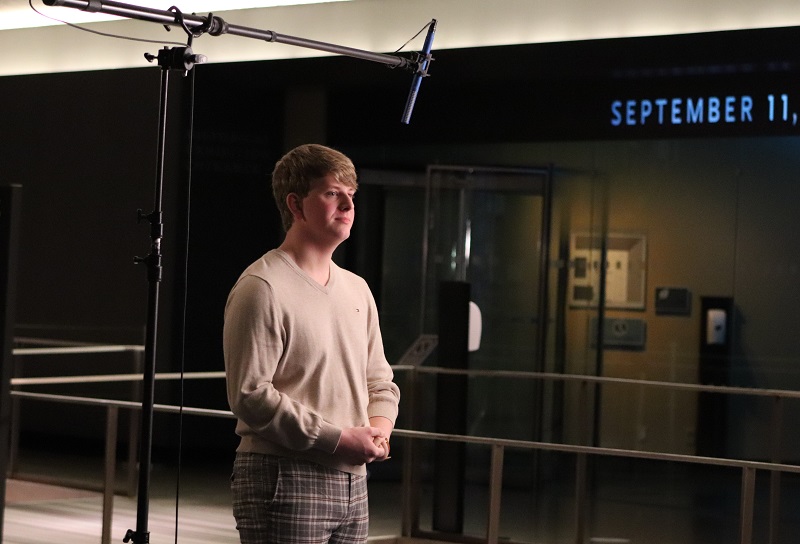
Lila Nordstrom’s story is just one of over a dozen narratives we offer in our Webinar Stories archive, and we are thrilled to provide many of these to educators through our Share My Lesson partner page. As we prepare for the 20th 9/11 anniversary, we are excited to continue adding to this collection and offering more diverse and impactful stories. Learning about real people who were affected by 9/11 and impacted in its aftermath offers a point of view that can seldom be found in history books. It enables students to see themselves in these stories, to feel the emotion of that day, and understand the impact that 9/11 continues to have on their generation. As time moves forward and this event recedes into the past, learning from these stories can leave a lasting impression on students, which can ensure that this day, and these people, will never be forgotten.
If you are interested in learning more about how you can integrate a story like Nordstrom’s into your classroom, we encourage you to view our on-demand webinar titled 9/11 to COVID-19: Using Narratives of Resilience to Connect Historical Turning Points, which was presented as part of the 2021 Share My Lesson Virtual Conference. If you would like to learn more about who will be telling their stories as part of the 2021 Anniversary in the Schools Webinar, visit our website and register today.
9/11 Lesson Plans and Resources
Stay connected with the 9/11 Memorial & Museum by following us on social media, and use the hashtag #911MuseumEd to share how you are using these resources in your classroom:
Facebook: www.facebook.com/911memorial
Twitter: www.twitter.com/Sept11Memorial or @sept11memorial
Instagram: www.instagram.com/911memorial or @911memorial
*Webinar Stories videos are available to view on our website in a variety of accessible formats, including English captions, ASL, audio description, and Spanish language (translation and subtitles).
Meredith Ketchmark is the Assistant Manager of Youth & Family Programs at 9/11 Memorial & Museum.