


The Legacy of George Floyd's Death Five Years Later
Ask students: What percent of Americans thought that protests around George Floyd's killing did not lead to improvements in the lives of Black citizens?
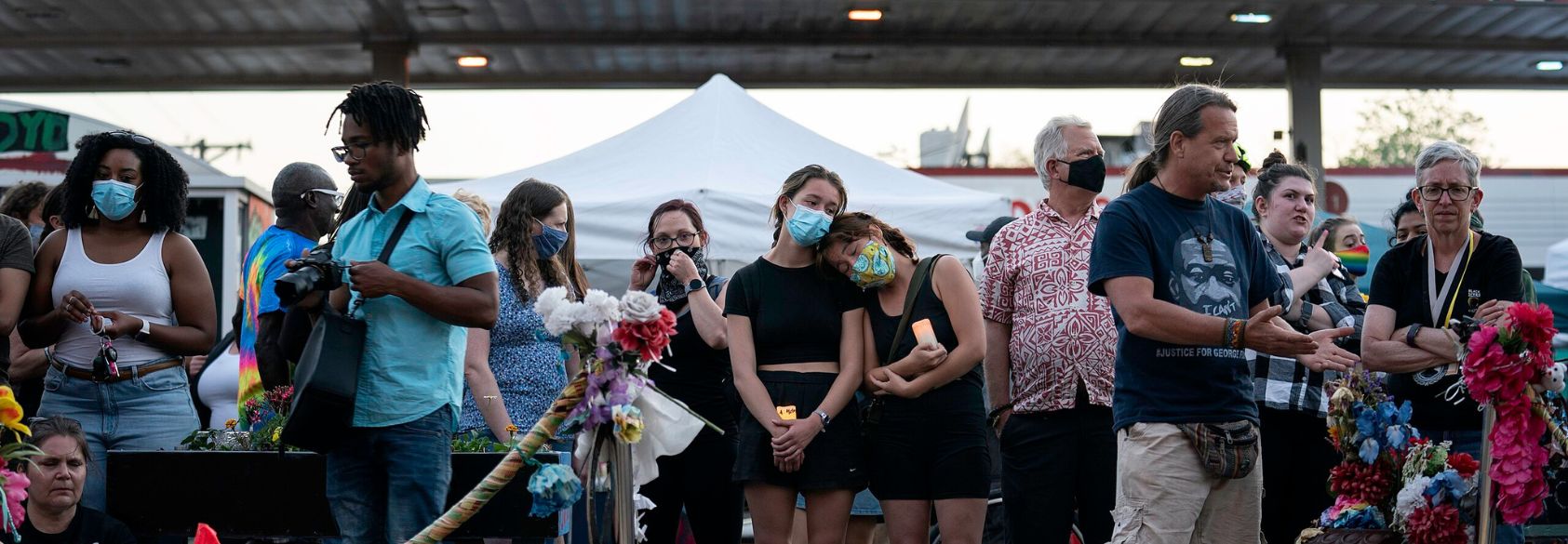
People pay respects to George Floyd a year after his death at George Floyd Square in Minneapolis, Minnesota. Photo credit: Lorie Shaull
Share
May 30, 2025
Ask students: What percent of Americans thought that protests around George Floyd's killing did not lead to improvements in the lives of Black citizens?
Share
On May 25, 2020, George Floyd was killed by Minneapolis police. Video of the event sent shockwaves around the world and triggered an American reckoning with racial justice and police use of force. For our ongoing series “Race Matters,” John Yang speaks with Selwyn Jones, Floyd’s uncle and co-founder of Justice 929, about his family’s continued fight for civil rights and police reform.
View the transcript of the story.
In this segment, host John Yang notes that while some police reforms did take place across the U.S. following George Floyd protests, killings by police officers have gone up compared to five years ago.
Selwyn Jones responds by saying, "I think the mental health that goes along with being a police officer has to be stressful. So we need more patience. You know, obviously we need more mental health evaluations . . . All I know is this is, we have to continue this fight, this push."
Media literacy: Examine the graphic below. Why do you think attitudes toward reform are so negative? If you could follow up with one question for those asked, what would it be?
Watch the following video with reflections from Minneapolis residents five years after Floyd's death. Then discuss — what reflection caught your attention, and why? Who else would you want to hear from to understand how Minneapolis has changed in the wake of the killing and the protests that followed?
Republished with permission from PBS News Hour Classroom.