


Lydia Bourouiba, a physical applied mathematician at MIT, takes us through the anatomy of a splash.
Vocabulary: fluid dynamics, disease transmission, contamination, image analysis, data collection

What about while that droplet is moving through the air?
Bacteria and viruses hitch a ride inside droplets of all kinds — sneezes, raindrops, even toilet splatter. By reviewing footage of different types of drops, applied mathematician Lydia Bourouiba records and measures where they disperse in order to better understand how diseases spread. Watch how Bourouiba designs tests — some inescapably humorous and awkward — to study infectious disease transmission.
Questions
- What are the potential problems with only relying on human reporting to track disease transmission?
- How does Dr. Bourouiba’s research demonstrate interactions between society and science?
- There were already studies on splash droplets from toilet bowls before Bourouiba began her research. Why is her research contribution important?
- Bourouiba said that hospital ventilation systems are not designed to prevent transmission. What evidence supports her claim?
- Based on information from Bourouiba’s research, make recommendations for how hospitals could be designed differently. (Look into more research from the Bourouiba Group
Activity Suggestions

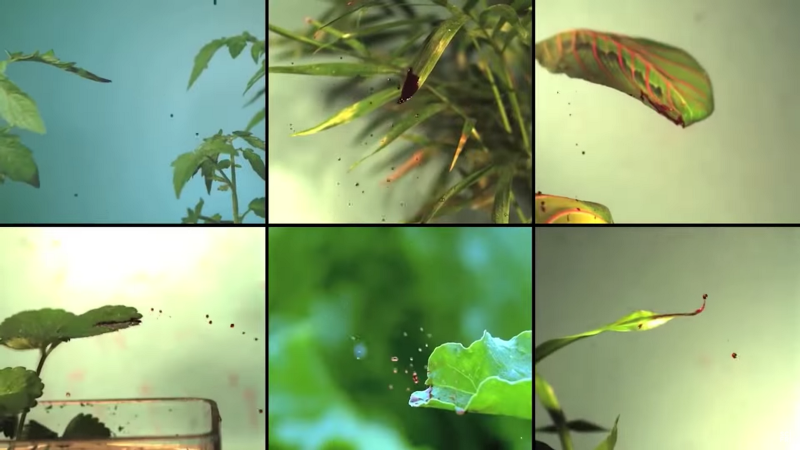
- In the video, Breakthrough: Connecting the Drops, Bourouiba and her team at MIT are conducting research on rain droplets and disease transmission in plants. Use this hydrophobicity investigation to take a deeper dive into how plants avoid disease by repelling water.
- Watch the video below that features Bourouiba’s earlier research on sneezes, and then use this activity to simulate a sneeze with paint and graphically determine where most of the sneeze lands with histograms.
Additional Resources
Want to hear more about toilet splash zones? Check out Lydia Bourouiba’s interview on The Anatomy Of A Splash.
Want to know more about the fluid dynamics of disease transmission? Check out more studies from the Bourouiba Research Group at MIT.
Next Generation Science Standards: CC1: Patterns, CC2: Cause and Effect, SEP6: Constructing Explanations and Designing Solutions
Common Core State Standards: CCSS.ELA-LITERACY.RI.7.8, CCSS.ELA-LITERACY.RI.9–10.8
Xochitl Garcia @msxgarcia -Education program assistant @scifri and 2015 #grosvenorteacherfellow @NatGeoEducation. #STEM Educator obsessed with food and board games.
Science Friday Spoonfuls @scifri - The latest and greatest science news from public radio’s Science Friday, ready for classroom use.

Covering the outer reaches of space to the tiniest microbes in our bodies, Science Friday is the source for entertaining and educational stories about science, technology, and other cool stuff. For 25 years, we’ve introduced top scientists to public radio listeners and reminded them how much fun it... See More
Advertisement