

Retired Military Leaders on Trump's Deployment of Troops in LA
Ask students: What is the authority that President Trump is claiming allows him to deploy the military against protests within the United States?
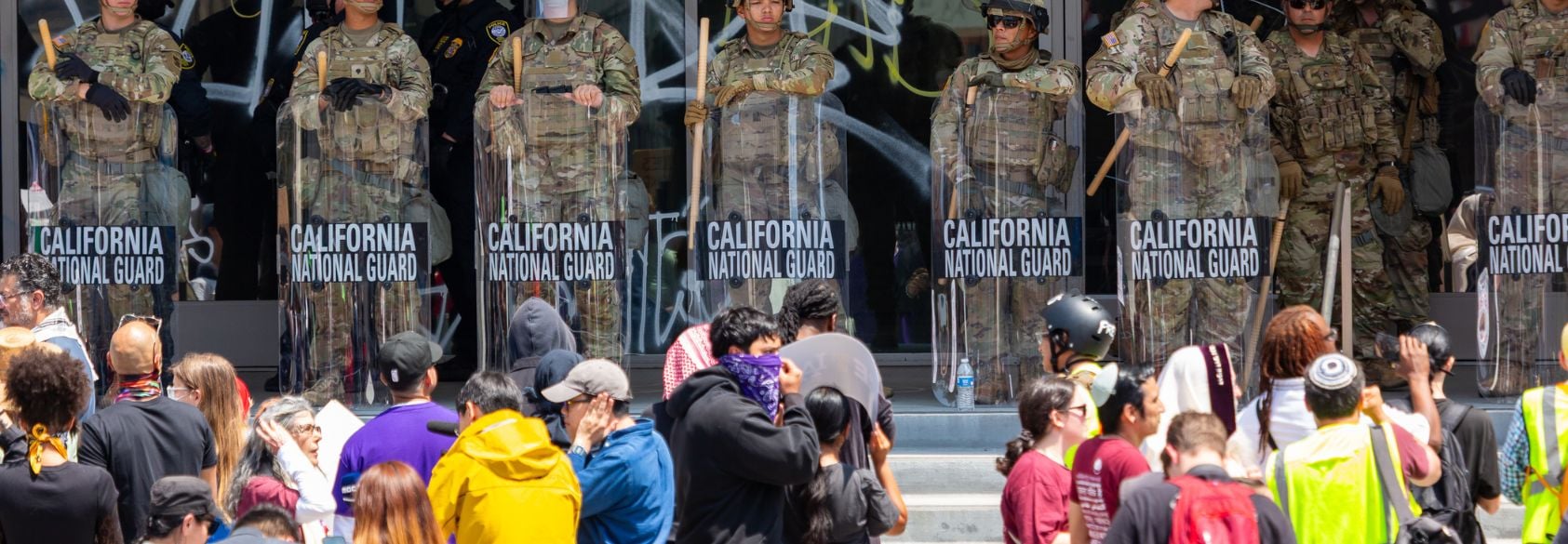
Should U.S. troops be used to respond to peaceful protests, or does this risk undermining democratic principles?
Share
June 12, 2025
Ask students: What is the authority that President Trump is claiming allows him to deploy the military against protests within the United States?
Share
For perspective on the Trump administration’s deployment of active duty Marines to Los Angeles and the federal call-up of the National Guard, Geoff Bennett spoke with James McPherson, an undersecretary of the Army during the first Trump administration, and retired Maj. Gen. David Baldwin was the top military commander of National Guard forces in California from 2011 to 2022.
View the transcript of the story.
In this segment, Rear Admiral James McPherson says, "Rules of engagement are defined as the circumstances and the limitations that U.S. forces can initiate or continue combat engagement. Rules of engagement are designed for combat engagement. What these Marines and the National Guard will be acting under are called rules for the use of force. They are very, very different."
Why do you think McPherson stresses the important difference between "rules of engagement" and "rules for the use of force"? How are the military and police forces trained differently, and how do you think that might affect the military's actions in Los Angeles?
Media literacy: Why do you think the producers chose retired military leaders for this segment instead of leaders currently serving?
What is the Insurrection Act, and what powers does it give a president?
Want to see more stories like this one? Subscribe to the SML e-newsletter!
Republished with permission from PBS News Hour Classroom.