
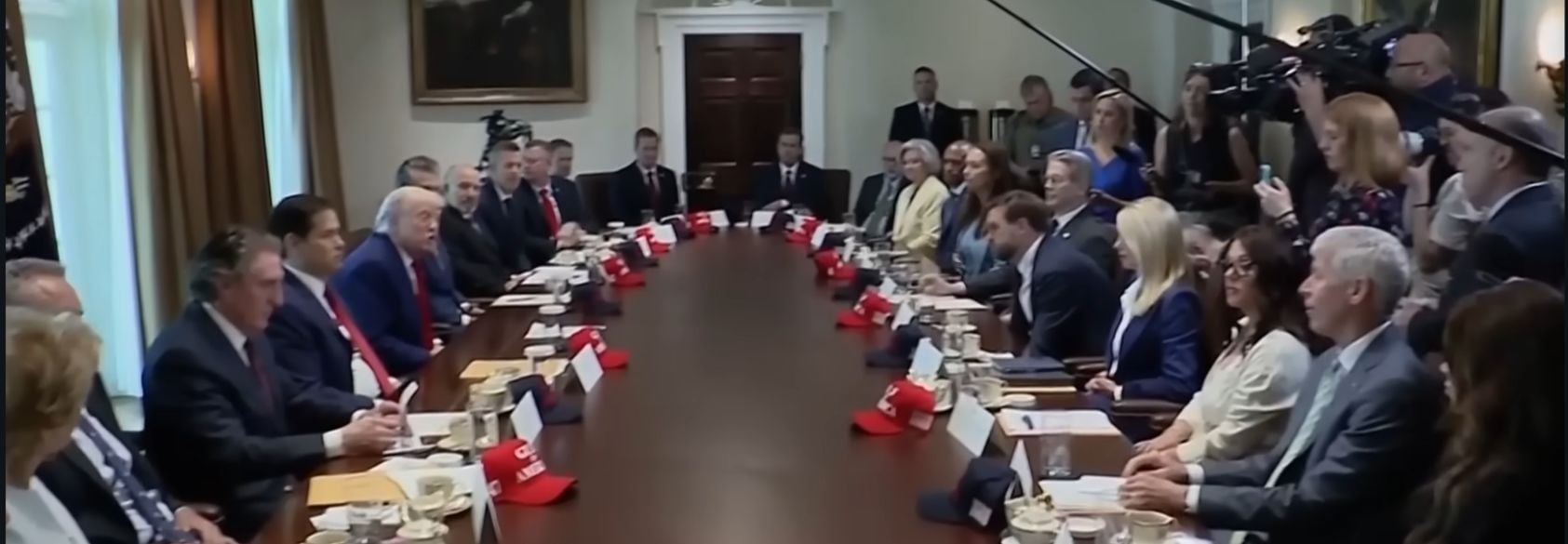
Government officials and business leaders meet around a long conference table, discussing economic policies including tariffs that affect everyday consumer goods.

How do decisions made in rooms like this impact the price of your everyday purchases?

What Tariffs Mean for the Everyday Products We Rely On

May 22, 2025

What Tariffs Mean for the Everyday Products We Rely On

Ask students: Where do nearly 1 in every 3 physical products made in the world today come from? How might tariffs affect products made in the U.S. that are manufactured with both foreign and domestic parts?

Share

Share On Facebook
Share On Twitter
Share On Pinterest
Share On LinkedIn
Email

Nearly one out of every three physical products made in the world today comes from China, including many items we use in our daily lives. Economics correspondent Paul Solman invites us into his home for a look at what tariff turbulence means for the products we rely on.

View the transcript of the story.

Key Term

tariff — a tax on imported or exported goods

Remote video URL

Discussion Questions

  1. Where do nearly 1 in every 3 physical products made in the world today come from?
  2. How might tariffs affect products made in the U.S. that are manufactured with both foreign and domestic parts?

  3. Why can't the U.S. just start to build everything in factories within the country?
  4. What is behind recent price increases in some products, according to Paul Solman?
  5. What is the larger problem with the Trump administration's tariff threats, according to economist Daniel Bergstresser?

Focus Questions

  1. President Trump says that his tariffs might result in children having "two dolls instead of thirty dolls." Meanwhile, Bergstresser says that U.S. consumers should be able to have the choice to own as much of a product as they want. Do you agree with one of these ideas over the other? Explain why or why not.
  2. Do you think that most Americans would pay more for products manufactured in the U.S. as opposed to more affordable goods made in China? Explain why or why not.
  3. Media literacy: Who else would you like to see interviewed to learn more about tariffs and how they might affect the U.S. economy?

Extension Activity

Watch the video below of a News Hour story featuring economists with differing views on Trump's tariffs, then answer these questions:

  1. What do economists Oren Cass and Jason Furman agree on regarding the Trump administration's approach to tariffs?
  2. Why do you think there are such differing opinions about the state of the U.S. economy during the Biden administration?
Remote video URL

Subscribe to Our Newsletter

Want to see more stories like this one? Subscribe to the SML e-newsletter!

Republished with permission from PBS News Hour Classroom.

PBS News Hour Classroom
PBS News Hour Classroom helps teachers and students identify the who, what, where and why-it-matters of the major national and international news stories. The site combines the best of News Hour's reliable, trustworthy news program with lesson plans developed specifically for... See More
Advertisement

Post a comment

Log in or sign up to post a comment.