



About This Lesson
Behavioral and brain imaging data reveal new details about how facial recognition works in the brain
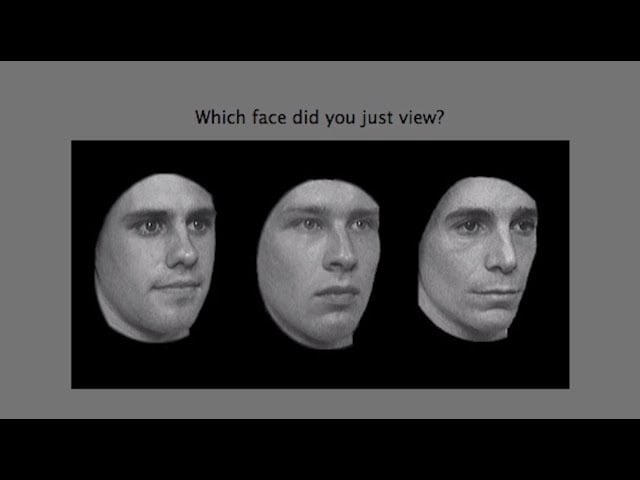
Description: People with acquired prosopagnosia recognize few faces, a condition known also as "face blindness." These are people who have suffered brain damage that interferes with their ability to recognize faces, even the faces of people they have met many times. The condition is rare. Only a few thousand people across North America have it.
With support from the National Science Foundation's Directorate for Social, Behavioral, and Economic Sciences, psychologist Brad Duchaine and his team are studying the brains of 20 people with acquired prosopagnosia to better understand the computational and neural basis of face processing in general.
The research will help scientists develop a classification system for the condition and advance understanding of how different face processing abilities, such as identity, expression and gaze, are organized in the brain.
The research in this episode was supported by NSF award #1634098 Testing and building models of face perception via acquired prosopagnosia.
NSF Grant URL: https://www.nsf.gov/awardsearch/showAward?AWD_ID=1634098&HistoricalAwar…
Miles O'Brien, Science Nation Correspondent
Kate Tobin, Science Nation Producer


